
48 hr
2-Day Sahara Express: Tunis, Hammamet & Sousse Departures
Two days of Roman ruins, underground villages, vast salt flats, and a night sleeping under the Sahara stars.
Reserve
Hand-picked by our editors — only the best 5 desert experiences from 40 reviewed.
Verified partners for every tour, free cancellation where available, and instant confirmation on every booking.
48 hr
Two days of Roman ruins, underground villages, vast salt flats, and a night sleeping under the Sahara stars.
Reserve
48 hr
Journey from Roman ruins to desert dunes on a 2-day guided adventure through southern Tunisia.
Reserve
48 hr
Journey from the coast into Tunisia's dramatic desert, oases, and ancient sites over two unforgettable days.
ReservePrices from verified partners. Availability updates in real time at checkout. Free cancellation policies apply where shown.
The landmarks, rooms, and views travelers on this tour remember — all visible on a single visit.
This expansive salt lake covers over 5,000 square kilometers and is known for its intense mineral colors. The area is prone to mirages due to the extreme heat.
These unique underground structures were built to protect residents from the intense desert heat. They are internationally recognized for their role in cinema history.
This rock formation resembles the neck of a camel and serves as a famous filming location. It offers wide, open vistas of the surrounding sand dunes.
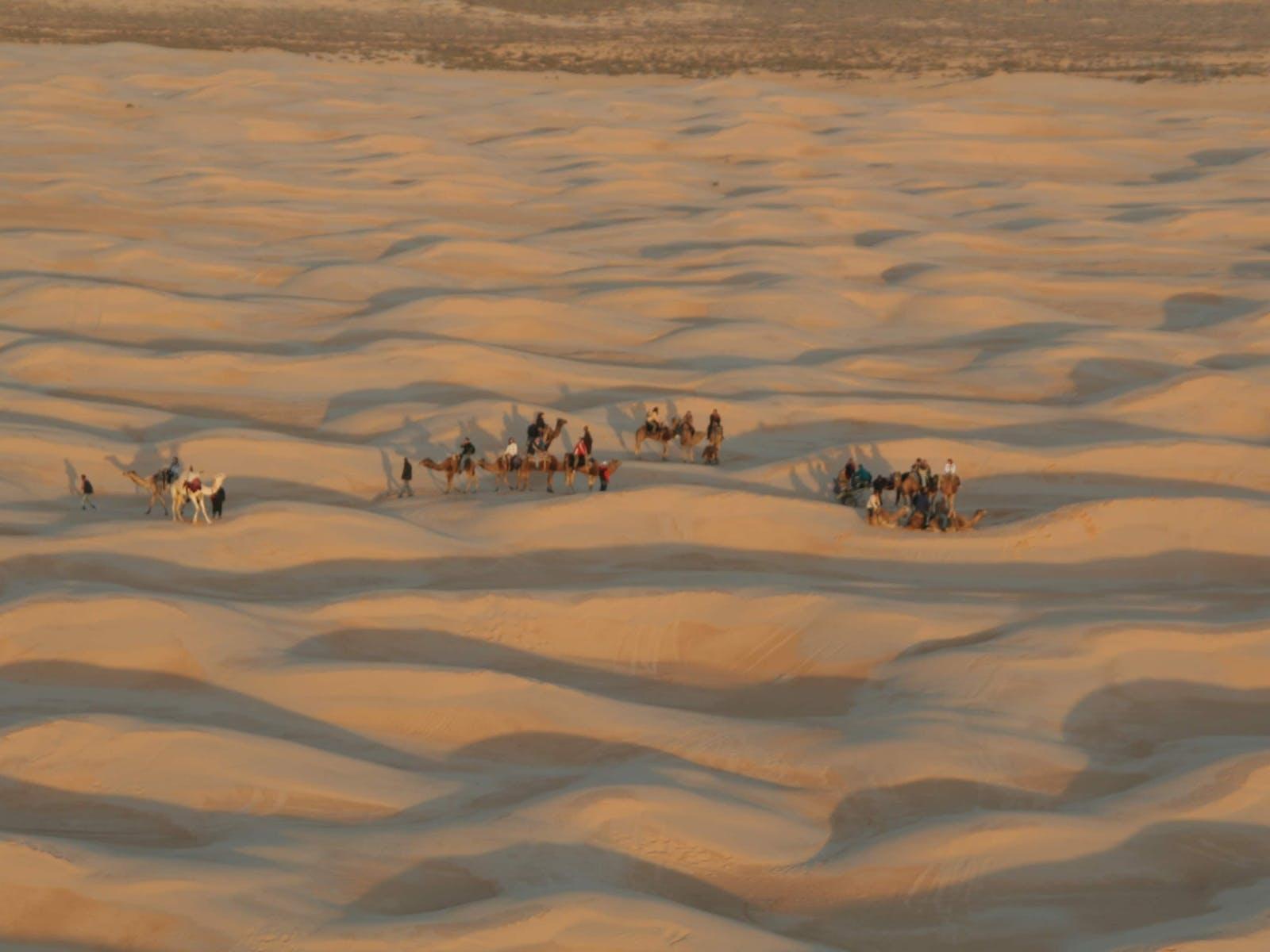
Known as the gateway to the Sahara, this region features massive palm groves that support local life. It is the center for desert trekking and cultural festivals.
This ancient oasis contains hundreds of thousands of date palms fed by natural springs. It serves as a vital agricultural center in the Southern Sahara.
The tunisian sahara two day tour from hammamet is superior for travelers seeking a concise highlights overview, while extended expeditions are better for those prioritizing slow-paced immersion.
| Feature | Top pick 2-Day Tour | Extended Expedition |
|---|---|---|
Pace |
Rapid and structured | |
Site Coverage |
High-density transit to landmarks | |
Budget |
Lower overall cost | |
Physical Demand |
Moderate due to travel time | |
Accommodations |
Standard hotel or camp stays | |
Depth of Desert Experience |
Introductory exposure | |
| See tickets → |
Verdict: Opt for the tunisian sahara two day tour from hammamet tours if you have limited time, or choose the private expedition if you prefer deeper desert exploration and flexibility with your tunisian sahara two day tour from hammamet tickets.
Choose your ticket, select your date, and reserve in under two minutes. Secure checkout handled by our verified partner.
Instant confirmation by email, with a mobile voucher you can save offline. No printing, no queuing at a collection desk.
Arrive at the entrance, show your voucher on your phone, and walk in. Most tickets include priority or skip-the-line access.
Practical details for your visit straight from our verified partners — hours, access, rules, and how to get there.
Resort pick-up area
Standard for most desert excursions
Private 4x4 vehicles are required for desert transit.
Limited access to deep desert regions; not recommended.
Wear light, breathable clothing that covers skin to protect against sun exposure. A headscarf is recommended for protection against sand and wind.
Travel with a soft-sided daypack for your essentials. Avoid bulky luggage as transport vehicles have limited storage space.
Use a polarized filter to manage glare from desert sands. The best lighting for landscape photography occurs during the 05:00–10:00 window.
Navigating the dunes is physically demanding and generally not accessible for those with limited mobility. Check with your tour operator for specific vehicle accommodations.
Network coverage is sporadic in remote dune areas. Download offline maps before departing Hammamet.
The tunisian sahara two day tour from hammamet is best suited for children who can handle long periods in a vehicle. Ensure younger travelers have adequate sun protection and hydration.
Carry at least two liters of water per day. Local operators often include traditional Berber meals in their itinerary packages.
Pets are prohibited on group transport and in protected desert areas. Please make boarding arrangements in Hammamet.
The tunisian sahara two day tour from hammamet requires preparation for significant temperature drops after sunset. Always follow the instructions of your local desert guide.
Best time to go, insider tips, nearby landmarks, and the cancellation fine print — flip through to skim what matters to you.
How crowds, weather, and events shift across the year.
March to May offers pleasant daytime temperatures for hiking.
June to August is extremely hot; prioritize early morning activities.
September to November provides mild weather for exploration.
December to February brings cold nights; perfect for stargazing.
Small details that turn a good visit into a great one.
Drink water before you feel thirsty to combat rapid dehydration. Desert humidity is extremely low, making evaporation invisible.
Prioritize landscape shots between 05:00 and 10:00 to avoid harsh midday shadows. This is the optimal window for the tunisian sahara two day tour from hammamet.
Protect camera sensors by avoiding lens changes in windy conditions. Use a protective cover for your phone and electronics.
Wear closed-toe, breathable shoes to navigate hot sand safely. Sandals are often insufficient for long walks on dunes.
Always ask permission before photographing local residents or private dwellings. Respect the quiet nature of desert camps.
Non-bookable sights within a short walk — free to visit, easy to pair.
Vast salt lake with mirage phenomena
Subterranean homes carved into the earth
Rocky outcrop used in film production
Traditional market for local handicrafts
Flexible, no hidden fees.
Full refunds are typically available for cancellations made at least 48 hours before departure. Access to the Sahara Desert region is 0 TND, though site-specific fees may apply.
Hand-picked options within walking distance — pick a district for vibe, or a specific hotel for convenience.
High-end stays near palm oases
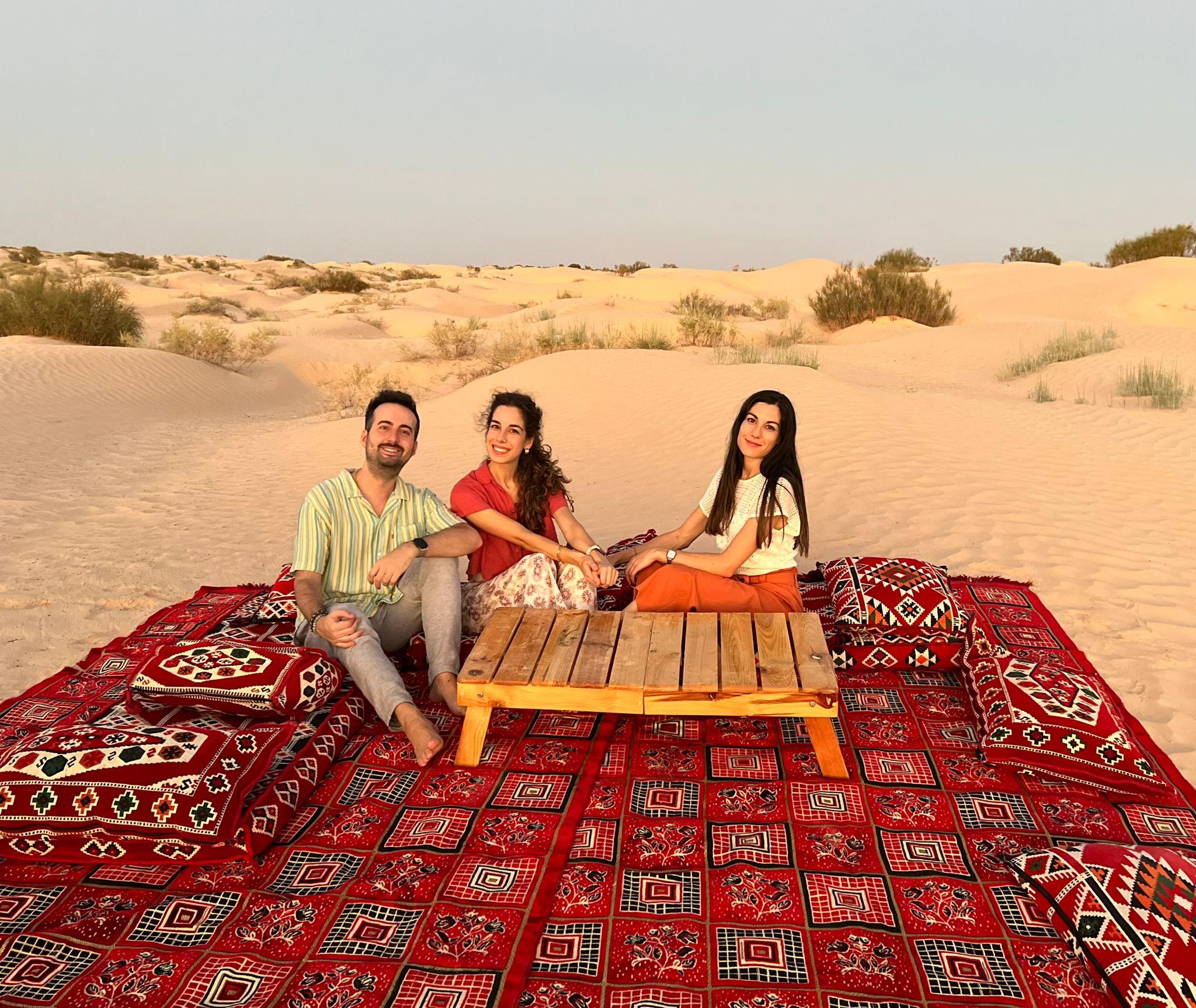
Authentic tented desert camps
Traditional underground lodging
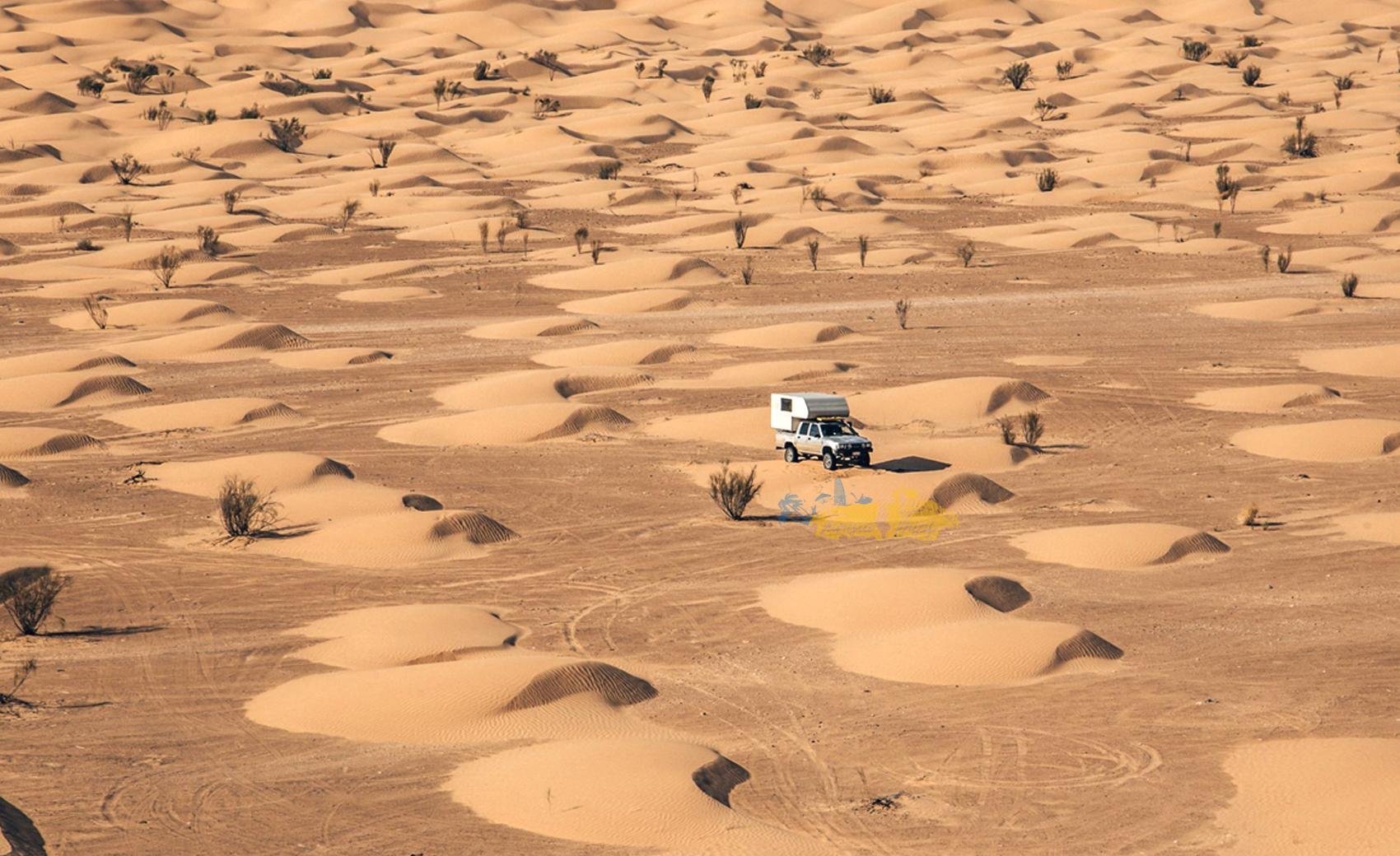
The Chott el Jerid, the salt pan that every road south of Tozeur must cross, covers roughly 5,000 square kilometres and sits below sea level. It is dry for most of the year and mirrors the sky when it is not. This is the threshold of the Tunisian Sahara, and the reason a tunisian sahara two day tour from hammamet exists at all: the distance between the Mediterranean resort strip and the true dune country is close to 500 kilometres, too far to fold into a single day. Southern Tunisia was never empty. Douz, the town that calls itself the gateway to the Sahara, grew from a palm oasis fed by artesian water and served as a market for the Mrazig, a semi-nomadic people whose camel caravans once carried dates and salt north. Its December festival still fills the sand arena with racing dromedaries. West of Douz, Tozeur's old quarter of Ouled el Hadef is built from ochre bricks laid in geometric relief, a fourteenth-century technique that produces shadow patterns changing hour by hour. The mountain oases of Chebika, Tamerza and Mides cling to cliffs on the Algerian frontier, each watered by a spring that has not failed in recorded memory. What draws many travellers now is cinema. The Ong Jemel site near Tozeur holds the Mos Espa set built in 1997, and Matmata's underground troglodyte houses stood in for a moisture farm in 1977. Both appear on a hammamet sahara desert tour alongside the older layers. The pit dwellings of Matmata are not scenery: Berber families dug them into the soft crust for insulation against summer heat that regularly exceeds 45°C, and some remain occupied. Between these points lie the ergs, the sand seas, where dunes at Ksar Ghilane and beyond shift with the wind and hide Roman garrison ruins. The Roman fort at Ksar Ghilane marks the desert edge of the limes Tripolitanus, the empire's southern frontier. Access to the Sahara Desert region itself carries an entrance fee of 0 TND, though individual sites within it charge separately, and the region is open around the clock, 00:00–23:59 every day of the week. A well-built tunisian sahara two day tour from hammamet strings these together in sequence rather than isolation, so that salt flat, oasis, film set and dune read as one continuous geography. That coherence is the argument for the two-day format over any shorter version.
"The pit dwellings of Matmata are not scenery — some remain occupied."
A step-by-step walkthrough of the visit — what you'll see, how long each stage takes, and the details that matter.
You leave the Hammamet resort strip between 05:00 and 10:00, the recommended arrival window for desert travel, before the heat builds. The minibus turns inland past El Jem's amphitheatre, then south through olive country. By late morning you are in Matmata, ducking into a troglodyte courtyard sunk four metres below ground level, where the air drops several degrees the moment you descend the ramp. Afternoon belongs to distance. You cross the Chott el Jerid on a raised causeway with white crust stretching to both horizons, and you stop where the mirage sits. Camp arrives at dusk: you climb a dune, watch the light go, and eat under canvas while a drum starts somewhere behind the tents. Sleep is cooler than you expect. Day two starts early. You ride a dromedary at first light, then drive to the mountain oases — Chebika's waterfall, Tamerza's abandoned village, the canyon at Mides. Tozeur's brickwork closes the loop before the long return north. Bring 3 litres of water per person, a scarf, and shoes you can shake sand out of. Book a tunisian sahara two day tour from hammamet with an overnight camp if you want the sky; the express version trades that night for an earlier finish. Either way, secure the desert trip in advance during summer, when seats fill quickly.
The Sahara Desert region is accessible 24 hours a day, with operating hours of 00:00–23:59.
Accessibility varies by region and tour operator, as the terrain is rugged.
There is 0 TND entrance fee for the Sahara Desert region, though specific sites may charge their own fees.
We recommend an arrival window of 05:00–10:00 to avoid extreme heat.
Yes, due to limited vehicle space, travelers should pack light, soft-sided luggage.
It is recommended to bring light snacks, though meals are generally provided on the tour.
Yes, photography is highly encouraged, especially during the 05:00–10:00 photography window.
Cancellation policies depend on the specific provider, typically requiring 48 hours notice for refunds.
Tours often visit Chott el Djerid, Matmata, and the dunes near Douz or Tozeur.